

Is the Psychology of Chess Key to Winning Games?
TL;DR:
- Chess is a mental game, heavily influenced by psychology and cognitive strategies such as pattern recognition and calculation skills.
- A player's mindset and emotional state drastically affect their game performance.
- Embracing a growth mindset and managing emotions, such as stress, significantly improve gameplay.
- Mental training techniques such as visualizing moves and deep breathing help manage stress and enhance performance.
- Common cognitive biases in chess, such as anchoring and confirmation bias, can overlook superior moves and negatively influence decision-making.
- Overcoming such biases requires critical thinking and constant validation of each move.
- Practical advice for overcoming negative mental habits includes acting against fear, replacing negative thoughts with positive ones, and visualizing success.
- Utilizing psychological principles such as maintaining focus and strategizing complex scenarios for opponents can enhance game performance.
- Mastering chess psychology is key to advancing one's game.
Ever wondered if psychology holds the key to stepping up your chess game? Delve into the heart of chess, and you'll find it's not just about playing pieces but also playing the mind. Today, we're exploring the immense role psychology plays in chess and how it can tilt the scales in your favour. From cognitive strategies to managing stress, we're unlocking the mental game behind those strategic moves. Welcome to the intriguing world of chess psychology, that might just be your secret weapon to victory!
Is the Psychology of Chess Key to Winning Games?
How does psychology affect chess playing?
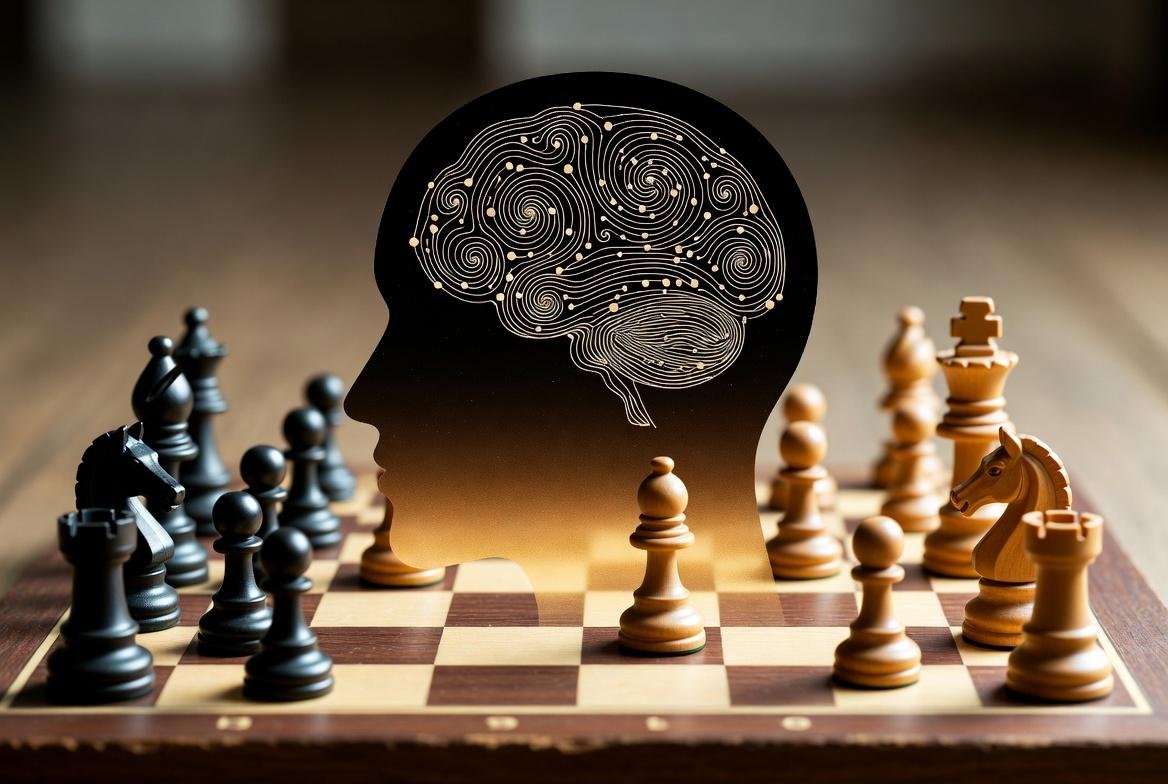
Chess is way more than moving pieces on a board. It's a mental war. Like in any war, psychology plays a huge role. The mind can be our greatest ally or the fiercest foe. Our mind can shape our game, drive our moves, even decide our wins. The use of psychology in chess is our secret weapon.
Let's talk about cognitive strategies in chess. These are thought processes. They help us make sense of the game. They help us plan our attacks and shield our king. They are key in chess. They're what seethe under the calm surface of the game.
What cognitive strategies are key in chess?
Pattern recognition is a big one. We subconsciously absorb common formations on the board. We use this knowledge to plan ahead. When we see a familiar pattern, we already have a game plan in mind. This makes us act faster and with more confidence.
Calculation skills are critical too. They help us track multiple possible moves. The better we are at this, the more moves ahead we can plan. In chess, this is a massive edge.
How do psychological factors affect performance in chess?
You won't believe how much your emotions and mindset can sway your game. Let's say you're scared of losing. This fear might make you play safe, miss chances, and limit your game. On the other hand, being too cocky can make you reckless, opening up holes in your defense.
In short, your mindset can affect your health on the board. I can't stress enough the role of a good mindset in a game of chess.
What role does mindset play in a game of chess?
Having a growth mindset can work wonders on your game. Players with this mindset see every game as a chance to learn and grow. They don't fear loss. They see it as a lesson. They believe they can improve. And they do. They put in the effort. They study and train. They keep getting better.
In chess, winners aren't born. They're made. And it's their mindset that shapes them.
Do you want to win at chess game? Pay attention to your mind and your mindset. Deck them up with the right tools and strategies. You'll see a world of difference in your game. And remember, in chess, it's not just about who plays best. It's also about who thinks best.
How can players manage stress and emotions in chess?
Chess is a mental game. It tests how well you can stay calm under pressure. When you play, your emotions can steer your moves. But keep in mind, in chess, emotion and stress can either spur you on to a win, or cause a loss.
How does stress impact chess performance?
Stress tugs at your focus. It distracts you from finding the best move. It triggers you to second guess chess moves that you should stick with.
What strategies can help in managing emotions for chess?
To keep your emotions in check, try deep breathing. It calms your mind and helps you to think clearly. Also, talking to yourself — in a positive way — can help maintain focus and ease stress during the game.
How can mental training techniques improve chess playing?
Mental training can better your chess skills. One such technique is visualizing possible moves before making them. This not only enhances your skill but also boosts your confidence during the game. A confident player is less likely to crumble under the stress of the game, leading to better outcomes on the chessboard.
Why are Common Cognitive Biases a Challenge in Chess?
Cognitive biases are one of the big battles you face in a chess game. They can cloud your judgment, making you overlook great moves. The first step in tackling this task is to identify the biases we can often fall into.
What are the Common Cognitive Biases in Chess, and How Do They Impact Decision Making?
One of the cognitive biases that can creep into your chess game is 'anchoring'. This is when you rely too much on the first piece of information you see. Suppose you see a chance to checkmate in three moves. Your mind then anchors on that, missing even better options. Another bias is the 'confirmation bias'. That's when you have a set plan in your mind and search for information that confirms it. You then overlook the moves that contradict your plan.
How are Thinking Patterns Utilized in Chess?
Chess is a game of patterns. You'll find the same themes again and again. Control of the center. Develop pieces. Keep the king safe. Knowing these patterns boosts your game. But remember, patterns only provide a guide, not the full picture.
How can Players Overcome these Biases for Better Performance?
Beating these biases needs work. You must question every move and double-check. Try to hear what your pieces are saying. Each piece on the board has a role. Listen to them, not the biases in your head. Think. Ask yourself, 'Is there a better move?' Don't rush. Time spent pondering moves now is time saved in later games. Remember, every game trains your brain for the next.
By knowing about these biases and how to beat them, you can significantly up your chess game. It's a battle of minds, but also a battle within your own mind. Overcome your biases, and you're a giant leap closer to becoming a chess master.
Why is the Psychology of Chess Crucial to Improving Gameplay?
If you want to up your chess game, mind tricks are key. Focus on two things: chess improvement and psychological tactics.
What Practical Advice Exists for Overcoming Negative Mental Habits in Chess?
Action beats anxiety. Identify your fear, then choose to act despite it. Practice makes perfect in this quest. The more moves you make under pressure, the less daunting each move becomes. Replace negative thoughts ("I can't do this") with positive ones ("I've got this").
How Do Psychological Principles Apply to Improving One's Chess Game?
Visualize success. In your mind, play out winning moves. This boosts confidence and hones strategy. You are training your brain to think ahead, a critical skill in chess.
What Insights Can Be Taken From Psychology to Enhance Chess Performance?
Never underestimate the power of focus. It sharpens your chess tactics. Also, remember that your opponent is battling their own pressures. Use this to your advantage by creating complex scenarios for them.
Remember, chess is a mind game. Making the right moves on the board begins with making the right ones in your head. Here's a site that explores the enormous importance of chess psychology(http://www.chess.com/article/view/the-enormous-importance-of-chess-psychology). It provides a good read on mastering your mental game.
Turn the tips given into practice. Before you know it, you'll be playing chess at a whole new level.
Conclusion
As we've explored, psychology deeply impacts chess play. Cognitive strategies, emotional control, and overcoming cognitive biases all influence your game. Remember, understanding these psychological elements can significantly improve your chess performance. Stay mindful, practice regularly, and see the difference. Happy gaming!